


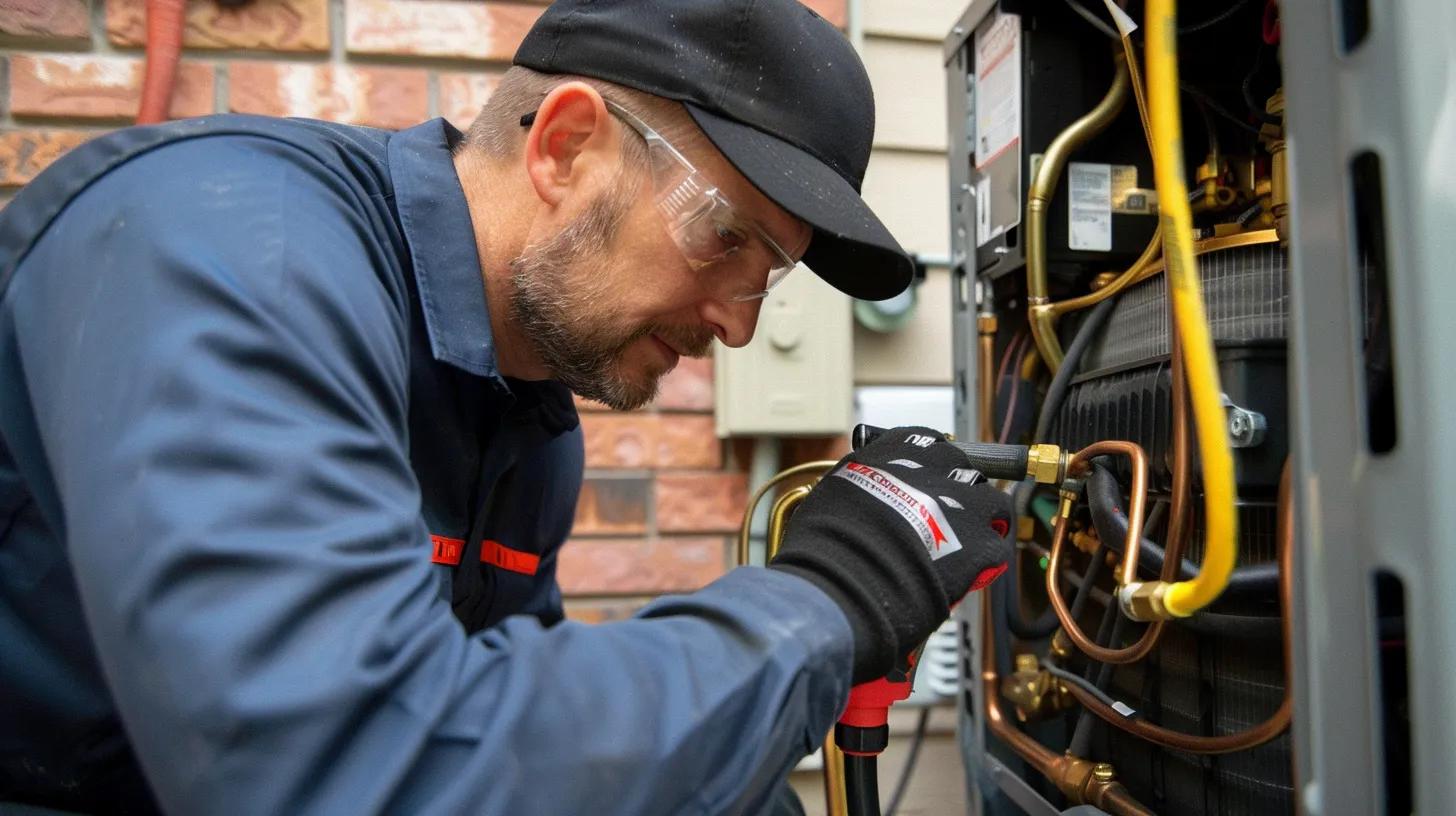
Furnace Failing Signs: How to Identify If Your Furnace Is in Trouble and What to Do
A furnace that is failing can affect comfort, safety, and monthly costs quickly; recognizing early signs helps homeowners act before a small problem becomes an emergency. This article explains the most common warning signals of furnace trouble, why those signals occur, and practical next steps you can take to diagnose, mitigate, or escalate the issue. You will learn how auditory cues, pilot-flame color, airflow and performance changes, visual residues, thermostat behaviors, and safety hazards like carbon monoxide reveal underlying component faults. Each section pairs clear definitions, cause–effect mechanisms, and concrete homeowner actions, plus decision guidance on repair versus replacement and maintenance benefits like tune-ups. Throughout the guide we reference local considerations for Sacramento-area climates, indoor air quality impacts, and options to get professional help from Bishop's HVAC when a technician visit is the safest or smartest next move.
What Are the Most Common Signs Your Furnace Is Failing?
A failing furnace shows a set of repeatable signals that point to component wear or combustion issues, typically affecting comfort, efficiency, or safety. These signs arise because parts such as the blower motor, ignition system, heat exchanger, and air filters either stop functioning optimally or create unsafe combustion conditions, producing predictable symptoms for homeowners. Spotting these signals early improves the chance of a straightforward repair and reduces energy waste, while ignoring them increases breakdown risk and safety exposure. Below is a concise list of the top warning signs to watch for and the immediate homeowner action to take if you observe any of them.
Common furnace warning signs to watch for:
• Strange noises: Banging, squealing, rattling, or clicking coming from the furnace cabinet.
• Yellow or flickering pilot light: Pilot flame that is not steady blue.
• Blowing cold air or uneven heat: Rooms that do not reach set temperatures consistently.
• High energy bills: Noticeable spike in heating costs without change in thermostat habits.
• Frequent cycling or short cycling: Furnace turns on and off rapidly or runs only briefly.
• Soot, stains, or water leaks: Visible residue around vents, heat exchanger area, or flue.
• Excessive dust or dry air: Rooms accumulate dust or occupants notice increased dryness.
• Unusual odors: Persistent burning or gas-like odors near the unit.
These signs each point to different underlying systems, and resolving them often requires a targeted diagnostic rather than guesswork. Read on for specific noise and pilot-flame explanations that link symptom to likely component failure and safe next steps.
How Can Strange Noises Indicate Furnace Problems?
Strange furnace noises are diagnostic clues: each sound pattern typically maps to a set of failing components, and addressing the root cause prevents progressive damage. Banging or backfiring often indicates delayed ignition or a cracked heat exchanger risk, while high-pitched squeals usually point to worn blower bearings or a loose belt causing friction. Rattling can be as simple as loose panels or as serious as failing burners; clicking at startup may show an ignition control issue or failing flame sensor. These noises matter because mechanical stress from failed bearings or frequent combustion abnormalities accelerates wear and can reduce system lifetime.
Below is a quick noise-to-problem mapping to help homeowners interpret common audio cues and decide whether a DIY check or professional diagnostic is appropriate.
• Banging / Backfiring — Likely Faulty Component: Delayed ignition, debris buildup, possible heat exchanger stress — Recommended Next Step: Turn off unit and schedule professional diagnostic; avoid running until inspected
• Squealing / High-pitch — Likely Faulty Component: Worn blower motor bearings or belt — Recommended Next Step: Check airflow and filter; book technician if sound persists
• Rattling — Likely Faulty Component: Loose panels, duct debris, or failing burners — Recommended Next Step: Tighten accessible panels, then call for inspection if noise continues
• Clicking at startup — Likely Faulty Component: Ignition control, relay, or flame sensor issues — Recommended Next Step: Try resetting power; schedule diagnostic if clicking continues
This table helps prioritize urgency: bangs and backfiring carry higher risk and warrant immediate professional attention, while some squeals may be addressed by maintenance. Understanding the sound source leads directly to safer, more cost-effective decisions and prepares you to describe symptoms accurately to a technician.
What Does a Yellow or Flickering Pilot Light Mean for Furnace Safety?
A healthy pilot or burner flame should burn steady blue; a yellow or flickering flame indicates incomplete combustion, which can produce carbon monoxide and signal ventilation problems or a cracked heat exchanger. Yellow flames often arise from dirt in the burner, incorrect gas pressure, or obstructed venting that starves combustion of oxygen, all of which reduce efficiency and create hazardous byproducts. Because carbon monoxide is colorless and odorless, a discolored flame is a visible early-warning sign homeowners must not ignore; it demands prompt inspection to rule out CO risk. If you ever see a yellow flame or smell combustion byproducts, shut off the furnace at the gas valve if you are trained and comfortable doing so, ventilate the area, and contact a qualified professional to perform a combustion analysis and safety inspection.
Paying attention to flame color and stability is one of the simplest visual checks a homeowner can perform, and it connects directly to occupant safety and combustion efficiency.
How Do Performance Issues Reveal Furnace Trouble?
Performance problems—like blowing cold air, uneven heating, frequent short cycling, and rising energy bills—are outward effects of internal failures that reduce heat delivery or control. These symptoms occur because systems such as the ignition assembly, blower motor, ductwork, and control board are interdependent; a fault in one area often alters runtime behavior and energy use. Detecting these patterns early makes it possible to resolve fouling, replace a malfunctioning motor, recalibrate the thermostat, or address duct leaks before a full system failure. Below we explore common performance complaints, offer homeowner troubleshooting steps, and present targeted remedies including maintenance and professional diagnostics.
Why Is My Furnace Blowing Cold Air or Causing Uneven Heating?
When a furnace blows cold air or heats unevenly, the problem may be as simple as a clogged air filter or as serious as ignition or heat-exchanger failure; distinguishing these quickly saves time and money. Common causes include dirty filters restricting airflow and forcing the blower to recirculate cold air, thermostat miscommunication or misconfiguration, closed or leaky ducts diverting warm air away from rooms, and ignition failures where burners never reach full flame. Homeowners can perform safe checks first: verify thermostat mode and setpoint, inspect and replace the air filter, and listen for ignition or blower activity. If basic checks don’t resolve the issue, it’s likely a component-level fault that requires a professional diagnostic to prevent repeated cold cycles and potential safety risks.
These troubleshooting steps increase the likelihood that a technician can diagnose the issue efficiently and recommend either a repair or targeted maintenance.
What Causes High Energy Bills and Frequent Furnace Cycling?
High energy bills and frequent short cycling commonly stem from efficiency loss, control faults, or mismatched sizing that increase runtime and stress on components, raising operating cost and failure risk. Typical causes are clogged filters, failing blower motors reducing heat transfer, faulty thermostats causing rapid on/off cycles, and short cycling due to an oversized furnace or a blocked heat exchanger that triggers limit switches. Short cycling not only wastes fuel but accelerates wear on ignition components and the blower assembly, creating a feedback loop of rising bills and breakdowns. Below is a comparison of causes, homeowner-visible symptoms, and recommended actions that map directly to services that fix efficiency problems.
• Clogged filters or restricted airflow — Symptoms Homeowners See: Reduced heat, dusty vents, higher bills — Recommended Action (Service): Replace filters; schedule airflow inspection and duct cleaning
• Failing blower motor — Symptoms Homeowners See: Weak airflow, high energy use, squealing noise — Recommended Action (Service): Book blower motor diagnostic and repair or replacement
• Thermostat or control faults — Symptoms Homeowners See: Erratic cycling, temp swings — Recommended Action (Service): Calibrate or replace thermostat and test control board
• Oversized or short-cycling unit — Symptoms Homeowners See: Very short run times, frequent starts — Recommended Action (Service): Professional load assessment and system evaluation
For homeowners in Sacramento and surrounding areas, resolving efficiency losses can yield rapid savings on energy bills while also extending equipment life. Regular professional tune-ups identify and correct many of these causes before they worsen.
As part of practical remediation, homeowners should consider preventative maintenance offers designed to restore efficiency. Bishop's HVAC promotes a Furnace Tune-Up Service for $79 that includes a 24-point inspection and tune-up; this service can resolve filter-related issues and identify failing components early. Additionally, Bishop's waives the diagnostic fee when you book their technicians for repairs, reducing the upfront cost of moving from diagnosis to repair and lowering friction when you need service.
What Visual and Environmental Signs Should You Watch For?
Visual and environmental indicators inside the home—like soot, stains, water leaks, increased dust, or persistent odors—signal combustion, ventilation, or component issues that often require inspection and cleaning. Such signs reveal problems at the heat exchanger, flue, condensate drains, or filter/delivery systems, and they have direct impacts on indoor air quality and occupant health. Recognizing these visual cues helps homeowners prioritize safety and IAQ improvements while selecting the right service, whether it’s cleaning, repair, or an indoor air quality upgrade. The sections below explain how to interpret visual residues and environmental symptoms and which professional services address each.
How Do Soot, Stains, or Water Leaks Signal Furnace Malfunctions?
Soot or dark stains around the burner area, vent terminations, or registers suggest incomplete combustion or venting problems, potentially linked to burner tuning, blocked flues, or a damaged heat exchanger. Water leaks or condensate around high-efficiency furnaces can indicate clogged condensate drains, cracked heat exchangers, or improper pressure trap operation, each requiring prompt attention to prevent corrosion and bacterial growth. Homeowners should visually inspect accessible areas for staining, avoid inhaling soot, and record the location and timing of leaks to report to a technician. Professional inspection can determine if cleaning, condensate-line service, or heat-exchanger repair/replacement is necessary to restore safe operation.
Visual residues are straightforward signals that often warrant immediate professional evaluation, especially when staining or leaks are recent or increasing.
Why Is Excessive Dust or Dry Air a Warning Sign?
Excessive dust or persistently dry indoor air often indicates poor filtration, duct leakage, or insufficient humidification, reflecting reduced airflow or circulation problems from the furnace and duct system. Fine dust accumulates when filters are past due or when ducts allow infiltration of dust-laden attic or crawlspace air, which also exacerbates allergy symptoms and reduces perceived comfort. Dry air can be a byproduct of over-ventilation or an older system lacking proper humidification controls, increasing static, discomfort, and respiratory irritation. Routine filter changes, duct sealing, and IAQ services such as humidification or upgraded filtration improve comfort and reduce particulate load, and professionals can assess whether the furnace itself or the ductwork needs repair to restore balanced air delivery.
Addressing IAQ-related visual and environmental signs improves both comfort and system performance while preventing secondary issues like increased filter clogging.
How Can Thermostat and Operational Problems Indicate Furnace Trouble?
Thermostat and operational control faults often masquerade as major furnace problems because the system’s response is governed by control signals; miscalibration or power issues can stop heating even when burners and blowers are functional. Issues such as incorrect temperature readings, dead batteries in wireless thermostats, wiring faults, or failed limit switches translate into symptoms like a furnace that won’t turn on, erratic cycling, or inconsistent temperature hold. Diagnosing whether the root cause is the thermostat, the control board, or the furnace itself requires systematic checks and sometimes professional tools. Below, practical homeowner steps and patterns of frequent repair are detailed to help decide when to perform safe DIY checks and when to call a technician.
What Does It Mean If Your Furnace Won’t Turn On or Has Thermostat Malfunctions?
A furnace that will not start can result from simple causes such as a tripped breaker, a switched-off furnace switch, dead thermostat batteries, or thermostat programming errors, and those are safe to check first. More serious internal causes include a failed ignition system, blown fuses on the control board, or a tripped limit switch indicating overheating; such problems require professional diagnostics. Homeowners should follow a safe checklist: confirm thermostat settings and power, check circuit breakers, replace thermostat batteries if applicable, and inspect filters to ensure airflow is not causing limit trips. If these basic checks do not restore operation, schedule a diagnostic visit so technicians can use combustion and electrical testing tools to identify and repair the fault.
Taking these first steps helps technicians diagnose faster and reduces downtime from unnecessary service visits.
How Do Frequent Repairs Reflect Underlying Furnace Issues?
When a furnace requires frequent repairs—especially repeated motor, igniter, or control-board work—it signals systemic wear, poor sizing, or chronic maintenance neglect that will eventually make replacement more cost-effective than ongoing repairs. The cost-versus-benefit question becomes clear when cumulative repair expenses approach a substantial fraction of replacement price or when reliability declines to the point that occupant risk or comfort is persistently affected. A professional evaluation that documents repair history, parts replaced, and remaining expected life can show whether continued repairs are justified or whether a modern, efficient replacement would yield better long-term value. Bishop's HVAC can evaluate recurring repair patterns, explain financing options, and help homeowners weigh SMUD rebate eligibility where applicable to offset replacement costs.
This evidence-based approach helps prevent throwing good money after bad and supports well-informed investment in home comfort systems.
What Safety Risks Are Associated with a Failing Furnace?
A failing furnace presents major safety hazards including carbon monoxide (CO) exposure, natural gas leaks, and fire risk from electrical faults or combustible residue. These hazards arise when combustion is incomplete, ventilation is obstructed, or electrical and mechanical components overheat or arc. Recognizing the early signs—occupant symptoms, detector alerts, gas smells, or visible combustion irregularities—and knowing immediate, prioritized actions can prevent tragedy. The sections below provide clear detection steps for carbon monoxide, as well as explicit emergency procedures to follow if you suspect a gas leak.
Conclusion
Identifying the signs of a failing furnace is crucial for maintaining comfort, safety, and energy efficiency in your home. By recognizing symptoms such as strange noises, pilot light issues, and performance problems, you can take proactive steps to address potential failures before they escalate. Regular maintenance and timely professional assistance can significantly extend the life of your furnace and improve indoor air quality. For expert help and preventative services, consider reaching out to Bishop's HVAC today.
Customer Testimonials

Our experience with Bishop Mechanical has been awesome. They have quick response, and do a great job! Very friendly, and Professional!


