


Why Is Your HVAC System Running Nonstop Without Cooling Your Home?
Your central air conditioner is running nonstop, but certain rooms in your house still feel uncomfortably warm. When you are facing this frustrating scenario, finding reliable home maintenance tips and troubleshooting steps becomes your top priority. A system that operates continuously without dropping the indoor temperature is doing more than just wasting electricity—it is signaling a fundamental imbalance in your cooling infrastructure.
The critical decision point for any homeowner is identifying whether this uneven cooling stems from a simple, fixable airflow restriction or a complex mechanical failure that requires professional intervention. Minor neglect, such as a forgotten air filter, can quickly snowball into a mechanical chain reaction that damages the compressor. During the peak summer cooling season, ignoring these warning signs often leads to complete system breakdowns.
Proactive troubleshooting is the best way to determine the scope of the problem. If you need a quick fix or are evaluating comprehensive cooling solutions and air conditioning installation, understanding how your system operates is the essential first step.
The Impact of Elk Grove's Extreme Heat on Your AC's Performance
The climate in the Sacramento Valley places unique demands on residential cooling equipment. With intense, dry summer heat waves regularly pushing temperatures past the century mark, air conditioning systems naturally run longer cycles just to keep up with the ambient heat.
However, extreme temperatures drastically reduce the margin for error in system performance. What might manifest as a minor airflow issue during a mild spring afternoon quickly becomes a critical failure point when the mercury rises. The outdoor condenser unit relies on efficient heat exchange to cool your home, and operating in 100-plus degree weather over consecutive days puts enormous strain on every moving part.
One homeowner in the local area reached out last fall after realizing their aging equipment simply could not keep up with the residual seasonal heat. After having a new HVAC system installed, they noted how wonderfully the new setup managed the demanding ambient temperatures without running endlessly. This highlights how proper sizing and system health are non-negotiable in this region.
Understanding Heat Load and Extended Cycles
Heat load refers to the amount of heat energy that must be removed from your home to maintain your desired indoor temperature. In Elk Grove's climate, the heat load spikes dramatically during July and August. Solar radiation beaming through windows, poor attic insulation, and daily household activities all add to this load.
It is perfectly normal for an air conditioner to run extended cycles during a severe heat wave. A properly functioning system might run for 45 minutes at a time to overcome the intense outdoor heat. However, there is a distinct difference between a long, productive cooling cycle and abnormal continuous running. If the unit runs for hours on end but the indoor temperature continues to climb, the system is failing to remove the heat load effectively.
The Mechanical Chain Reaction: From Dirty Filter to Compressor Failure
To understand why an air conditioner runs constantly without cooling, you have to look at the mechanics of the refrigeration cycle. The process relies entirely on a precise balance of airflow and refrigerant pressure. When that balance is disrupted, the consequences compound rapidly.
The Problem: A severe airflow restriction, most commonly caused by a clogged air filter or blocked return vents, starves the system of the warm indoor air it needs to function.
The Cause: Without sufficient warm air blowing over the indoor evaporator coil, the refrigerant inside the coil stays too cold. The system's internal pressure drops. Moisture from the surrounding air begins to condense and freeze directly onto the copper coils.
The Solution: Maintaining unobstructed airflow prevents this pressure drop. If a freeze-up occurs, the system must be shut down entirely to thaw before normal operation can resume, and the underlying airflow blockage must be cleared.
During the peak summer cooling season, continuous operation without adequate airflow drastically increases the risk of these freeze-ups. A frozen coil acts as an insulating barrier, reducing the system's cooling capacity to zero. Yet, the thermostat still registers a warm room, so it continues signaling the outdoor compressor to pump refrigerant. This forces the compressor to overwork, attempting to push refrigerant through a blocked, frozen system. This mechanical chain reaction accelerates compressor burnout, transforming a minor maintenance oversight into a catastrophic system failure.
How Airflow Restrictions Alter System Pressure
Your ductwork operates on the principle of balanced supply and return air. The blower motor pulls warm air in through the return grilles, pushes it across the evaporator coil, and distributes the chilled air through the supply vents. Any restriction in this loop causes a pressure drop. When static pressure rises too high because of a dense, dirty filter, the blower motor has to work twice as hard to move half the volume of air, setting the stage for uneven cooling across different rooms.
The Danger of Evaporator Coil Freeze-Ups
A frozen evaporator coil is a serious mechanical threat. Symptoms include reduced airflow at the vents, warm air blowing from the registers, and visible ice forming on the copper refrigerant lines near the indoor unit. Because the compressor relies on the returning refrigerant to cool its internal motor, a frozen coil sends liquid refrigerant back to the compressor—a condition known as "liquid slugging." Compressors are designed to pump gas, not liquid, and liquid slugging can destroy the compressor valves in a matter of hours.
Safe Homeowner Troubleshooting: What You Can Check Yourself
Before assuming your system has suffered a major mechanical breakdown, there are several safe, basic checks you can perform. According to the U.S. Department of Energy, replacing a dirty, clogged filter with a clean one can lower an air conditioner's energy consumption by 5% to 15%.
Here are the safe homeowner troubleshooting steps you can take to address uneven cooling:
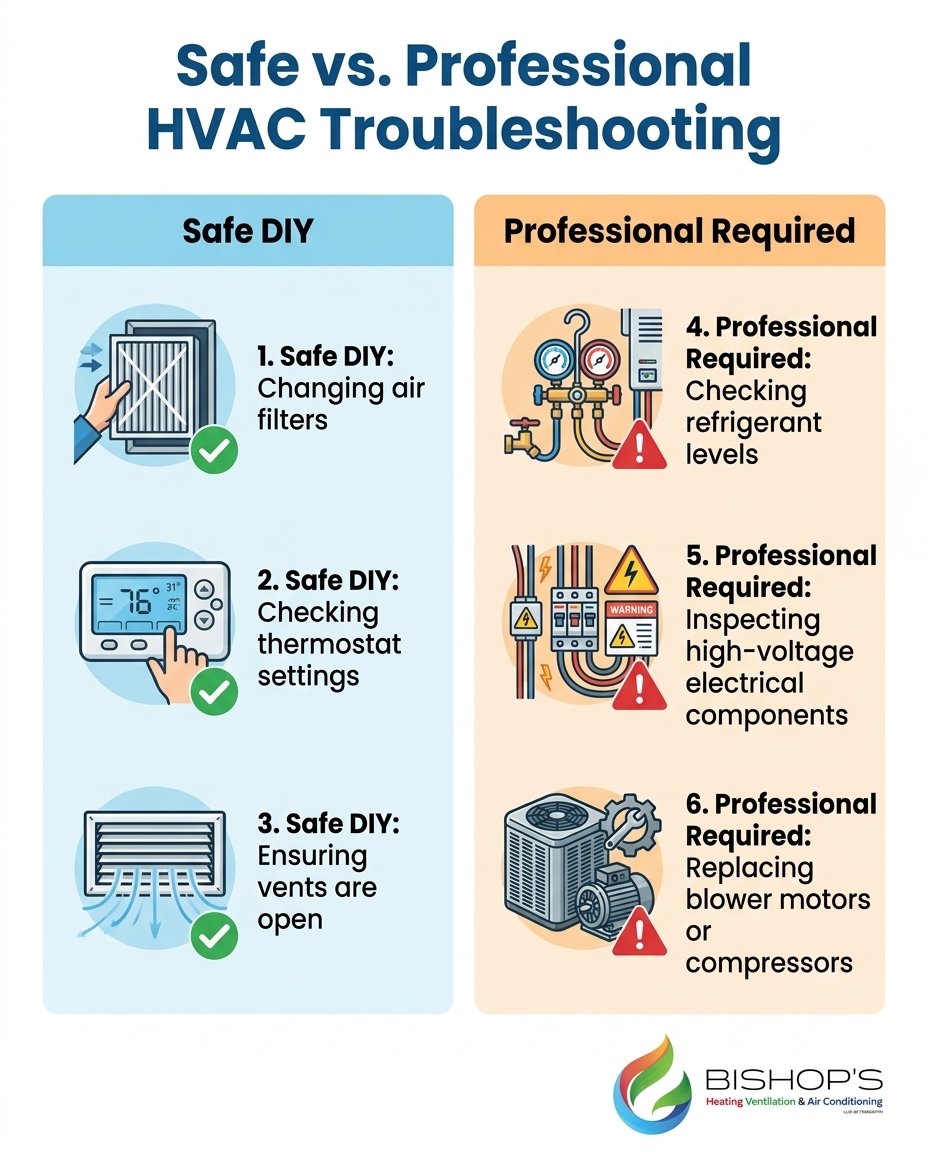
• Check the thermostat settings: Ensure the system is set to "cool" and the fan switch is set to "auto" rather than "on."
• Inspect the primary air filter: Locate your return air filter. If you cannot see light through it, replace it immediately with a fresh one.
• Examine all indoor vents: Walk through every room to ensure supply registers and return grilles are fully open and unobstructed by rugs, curtains, or furniture.
• Clear the outdoor condenser: Safely remove leaves, branches, and debris from a two-foot perimeter around the outdoor unit to ensure proper exhaust airflow.
• Verify the power supply: Check your home's electrical panel for a tripped circuit breaker that might have disabled the outdoor unit while the indoor fan continues to blow.
Thermostat and Power Checks
Often, constant running is caused by a thermostat issue rather than an HVAC failure. If the fan is set to "on," the blower will run 24/7, circulating room-temperature air even when the cooling cycle is off. Additionally, weak batteries in a digital thermostat can cause erratic signals. Always verify these settings and check the main breaker panel before assuming the worst.
Airflow and Filter Inspections
Uneven cooling in a two-story home is frequently the result of poor airflow management. Closing vents in unused rooms is a common myth that actually harms your system. It increases static duct pressure and forces air back toward the blower, making the system work harder. Keep all vents open to maintain the pressure balance the system was designed for.
The Danger Zone: When to Stop and Call a Professional
While checking filters and clearing away leaves are great proactive steps, there is a strict boundary between safe homeowner maintenance and dangerous diagnostic work. Bishop's HVAC operates as a neutral, educational expert that prioritizes your safety and the long-term health of your system over quick DIY hacks.
Never attempt DIY refrigerant diagnostics. Handling pressurized chemical refrigerants requires specialized gauges, recovery tanks, and EPA certification. Venting refrigerant into the atmosphere is illegal and environmentally hazardous. Furthermore, interacting with the system's electrical components carries severe risks of electrical shock.
If your system is still running continuously after you have verified the airflow and thermostat settings, the issue is likely a mechanical failure requiring a licensed technician. One local customer experienced a complete breakdown during 110-degree summer weather. Because they prioritized safety and called a professional rather than attempting a dangerous internal repair, a technician arrived the same day and repaired the unit safely within 30 minutes.
Refrigerant Leaks and Pressurization Issues
Air conditioning systems do not "consume" refrigerant. If the system is low on charge, there is a leak somewhere in the copper lines or coils. Signs of a chemical leak include a faint hissing noise near the unit, ice buildup on the refrigerant lines, and a sweet, chemical smell. Only a certified professional has the tools to locate the leak, braze the copper to seal it, and recharge the system to the exact manufacturer specifications.
High-Voltage Electrical Components
The outdoor condenser houses high-voltage components, including contactors and dual-run capacitors. A capacitor stores a massive electrical charge to help jump-start the compressor motor. Warning: A capacitor can deliver a lethal shock even after the main power to the unit has been turned off. Never open the electrical access panel on your HVAC equipment. Leave motor testing and wiring diagnostics to licensed professionals to protect yourself and avoid voiding your manufacturer warranty.
Evaluating Your Options: Repair vs. New AC Installation in Elk Grove
When continuous running and uneven cooling point to a major mechanical failure, homeowners face a significant decision: repair the existing unit or invest in a full replacement. As a reliable installer serving the Elk Grove community, Bishop's HVAC provides honest assessments to help you weigh these options.
A helpful baseline for this decision is the "5,000 rule." You calculate this by multiplying the age of your equipment in years by the estimated cost of the repair. If the resulting number exceeds 5,000, replacing the unit is generally the more financially sound decision. Frequent breakdowns, rising utility bills, and an inability to maintain comfort during peak summer temperatures are major indicators that a system has reached the end of its functional lifespan.
• System is under 10 years old with a minor electrical issue. — Action to Consider: Targeted Repair — Long-Term Impact: Restores function without major capital investment.
• System is 12+ years old and requires a new compressor. — Action to Consider: Full Replacement — Long-Term Impact: Prevents sinking funds into obsolete technology.
• System runs constantly but energy bills remain stable. — Action to Consider: Maintenance / Tune-up — Long-Term Impact: Resolves airflow restrictions and improves efficiency.
• System uses obsolete R-22 refrigerant and has a leak. — Action to Consider: Full Replacement — Long-Term Impact: Transitions home to modern, eco-friendly refrigerants.
Modern air conditioners offer massive energy efficiency gains compared to units manufactured 10 to 15 years ago. Understanding the average cost of a new air conditioner helps you make an informed choice, balancing upfront investment against years of reduced utility bills and reliable comfort.
Signs Your System Needs Replacement
Beyond the simple age of the unit, pay attention to performance trends. If you are scheduling multiple service calls per year just to keep the system limping along, those repair costs add up rapidly. Furthermore, if your home is consistently humid or if certain rooms simply never cool down despite professional repairs, the system may be improperly sized or mechanically exhausted.
Protecting Your Investment: Maintenance and Financing
Whether you choose to repair your current system or upgrade to a high-efficiency model, protecting that investment is paramount. The long-term value of a preventative maintenance plan cannot be overstated. Routine professional tune-ups catch failing components—like weak capacitors and minor refrigerant leaks—long before they trigger the mechanical chain reactions discussed earlier.
During a comprehensive tune-up, technicians clean the condenser coils, calibrate the thermostat, measure motor amperage, and verify the refrigerant charge. This proactive care extends the lifespan of the equipment and ensures it operates at peak efficiency when the Sacramento Valley heat waves hit.
If a replacement is necessary, the financial aspect does not have to be overwhelming. There are flexible HVAC financing options available to help homeowners manage the investment of a new system through predictable monthly payments. Additionally, generally applicable energy rebates or federal tax credits may apply to qualifying high-efficiency installations. We always advise readers to verify current programs with their utility provider or a tax professional to maximize their savings.
The Value of Proactive Care
Think of HVAC maintenance like an oil change for your vehicle. Skipping it might not cause an immediate breakdown, but it guarantees reduced performance and premature failure down the road. Regular cleaning of the blower assembly and chemical washing of the outdoor coils ensure the system can exchange heat effortlessly, completely avoiding the continuous running cycles that drive up your utility bills.
Next Steps for Restoring Comfort to Your Elk Grove Home
While basic airflow checks and filter replacements are safe and necessary, an air conditioner that continues to run constantly without cooling your home usually points to a deeper mechanical issue. Ignoring these symptoms during extreme heat only accelerates wear and tear on your compressor.
Prioritize your safety and the health of your system by relying on a local expert to properly diagnose the root cause. Enrolling in a preventative maintenance plan ensures these issues are caught early in the future. If your system is struggling to keep up, schedule a professional inspection today to restore reliable, even comfort to every room in your home.
Frequently Asked Questions
Why is my AC running constantly but not cooling the house?
This usually indicates an airflow restriction or a refrigerant issue. When the system lacks sufficient airflow due to a dirty filter or blocked vents, it cannot remove heat efficiently. Alternatively, low refrigerant levels prevent the system from absorbing heat, forcing it to run continuously in a futile attempt to reach the thermostat's set temperature.
Can a dirty air filter cause uneven cooling in a two-story house?
Yes, a clogged air filter severely restricts the volume of air the blower motor can move. Because the second story is furthest from the indoor unit and naturally accumulates rising heat, it is usually the first area to suffer when airflow drops. Replacing the filter restores the static pressure needed to push cool air to the upper levels.
When should I call a professional for AC troubleshooting?
You should call a professional if you have already replaced the air filter, checked the thermostat settings, and ensured all vents are open, yet the system still runs continuously. Any issues involving strange electrical noises, ice on the refrigerant lines, or a completely unresponsive outdoor unit require a licensed technician immediately.
How do I know if my AC compressor is overworking?
Signs of an overworking compressor include the outdoor unit running for hours without stopping, unusually loud humming or grinding noises, and a spike in your monthly electricity bill. If the air coming from your indoor vents is lukewarm while the outdoor unit is running loudly, the compressor is struggling under severe mechanical strain.
What HVAC troubleshooting can a homeowner safely do?
Homeowners can safely replace indoor air filters, swap out thermostat batteries, verify that the circuit breakers are not tripped, and clear leaves or debris away from the outdoor condenser unit. You can also inspect all room registers to ensure they are open and unblocked by furniture or rugs.
How does Elk Grove's dry heat affect my air conditioner's lifespan?
The intense summer heat in the Sacramento Valley forces air conditioners to run longer, more frequent cycles, accumulating mechanical wear and tear faster than in milder climates. Without strict adherence to seasonal maintenance, this heavy heat load can significantly shorten the lifespan of the compressor and electrical components.
Customer Testimonials

Our experience with Bishop Mechanical has been awesome. They have quick response, and do a great job! Very friendly, and Professional!


